
It’s not always that easy to get good information these days. When you’re searching for what the cost will be in getting a tankless water heater installed, you’re not initially sure of all the ins and outs associated with an installation. The answers that you find are also too vague because the range of pricing is too broad and so you really have no idea where to begin with your budgeting.
The truth is that there are many factors that end up determining the cost for a tankless water heater installation and that’s why you can end up getting such a large spread in prices.
You could have a scenario where two houses are side by side in an estate but the cost of installation differs substantially because of the layout of the property and what’s behind the walls. We’re going to give you an informed professional plumbing breakdown of all the factors involved so that you can understand what your tankless water heater cost will be.
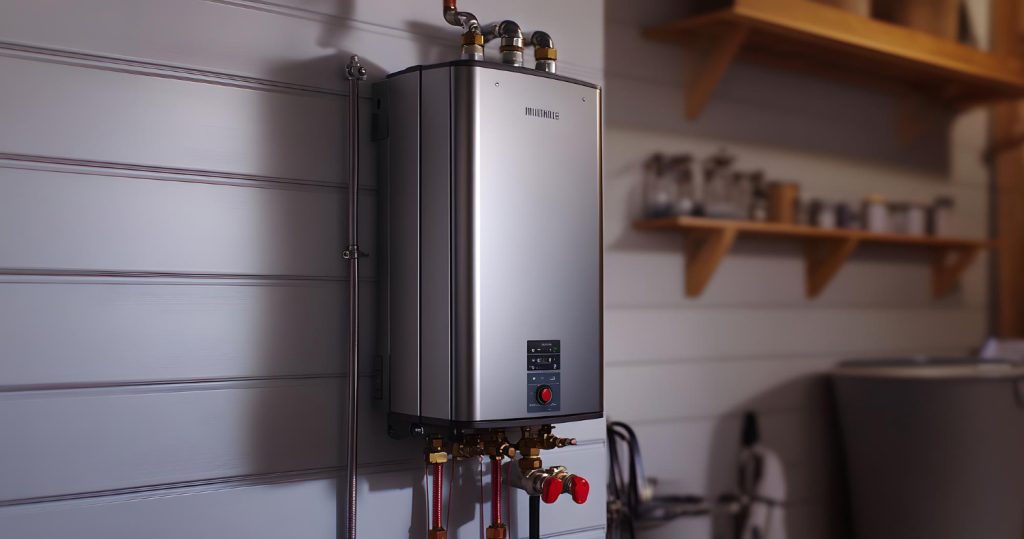
Hot Water Demand: Why Sizing is Key
An often underestimated factor of tankless water heater cost is the actual size system that is required for a home to provide adequate hot water according to the demand. There’s a fundamental difference between a water system with a tank and one without. With a storage tank, you buy a certain capacity, wait for it to get hot and then use it as you please until you run out and wait again. The difference with a tankless system is that there is no waiting. The water is heated on demand as and when the faucet is cranked open.
Tankless water heaters are rated in Gallons Per Minute (PM). Rating a system in this way means that supply must match demand, so whatever fixtures that you are running at one time will determine your demand. The idea is that if they are all running at full capacity, the tankless water heater needs to be able to match that with supply.
There are a few interconnected factors that all play a part in getting the sizing right for your particular installation.
Bathrooms And Fixture Demand
As hinted above, if you have a home with two showers, a dishwasher, and a washing machine and they all run simultaneously, then the GPM required is going to be significantly higher than a home where there is only one bathroom.
Groundwater Supply Temperature
The math is fairly intuitive here: the colder the water is, the more energy you’ll need to heat it to temperature. This has to be one of the most overlooked factors when sizing a tankless water heater. For instance, most homes have a desired output temperature of around 120° F. If your incoming groundwater is 40° F, then you have a massive 80° F jump in temperature to make! Conversely, in the summer months, the groundwater may be 65° F and require a lot less energy to heat it to the desired temperature setting.
Household Usage Patterns
Another dictator in demand is the pattern of usage that your family members use hot water. Does everyone shower at the same time in the morning? Is the washing done at the same time before leaving for work? Sometimes the most effective way to deal with high demand is to have multiple units supplying different areas of the home, and this will also impact your tankless water heater cost.
Why Sizing Matters Most
If you spec a tankless water heater that is too small for your home, you could end up getting cold showers if someone decides to do the washing. If it’s too big for your home, then you’ll end up carrying unnecessary costs just to have heated water. Finding a unit with the correct GPM and power balance required for your regional water temperatures is essential in getting the budget right.
Gas Line Capacity And Potential Upgrades
Fuel supply for a gas-powered tankless water heater is one of the largest variables in both labor and materials. Standard water heaters burn gas slowly for a long period of time to keep large volumes of water warm. The way that energy is measured in terms of heating and cooling is by using the British Thermal Unit or BTU.
For a standard water heater, the amount of BTUs needed to heat water is usually around 30,000 to 50,000 BTUs. In the case of a tankless water heater, it must instantly supply hot water at a desired temperature by flash heating the water as it passes through the heat exchanger. This means that the energy required is around 150,000 to 199,000 BTUs, a vast difference, but for a shorter time span, since when the faucets are closed, they are not using any energy.
Due to the fact that so much energy is required so quickly, the gas supply system must be able to handle it. You may be in a situation where the gas line that supplies the tankless water heater is woefully too small, and an upgrade is necessary.
The following items will need addressing:
- A larger gauge gas pipe from your gas meter to the installation site
- Upgrading all gas regulators and fittings
- If the gas meter requires an upgrade as well, then you will need to coordinate with your utility provider
Venting Requirements
Any system that burns fuel generates exhaust gases, and these gases are at high temperatures. They need to be vented safely out of the home, and therefore they can’t use traditional metal, natural-draft chimneys that are common in most Kerrville and San Antonio homes, they require a specialized chimney vent because of the extreme heat that they generate.
Non-Condensing Tankless Heater Models
These types of heaters do not deal with the extreme heat in the exhaust gases; they just exhaust it. Because of this limitation, they must have what is referred to as a Category III stainless steel chimney. These chimneys are made from a specialized stainless steel that is designed to deal with the heat as it comes off the heater.
Condensing Tankless Heater Models
Condensing models are very cleverly designed heaters where the heat coming off the exhaust chimney is used to pre-heat the incoming water load before it hits the burner. This results in a far more efficient use of gas and less heat lost out of the chimney. As such, specialized plastic pipes can be installed with these setups, making use of PVC, CPVC, or polypropylene.
Complexity of Vent Path
In some homes, the route outside for the vent is a seamless journey, out one wall and into the great outdoors and then up the side wall of your home. In other homes, there is a more complex journey to vent hot exhaust fumes. In homes where there are multiple floors, or the best installation site is in the middle of the home, then the route to vent out is more complicated. Multi-story installations require additional labor, material, and specialized thimbles installed in the walls or roof. These thimbles are a spacer that provides an air-gap between the hot exhaust pipe and the flammable drywall or plywood that makes up the walls and roof decking. All of these extra steps must be taken to ensure that your home complies with fire and safety codes.
Installation Site Location
A new tankless heater means that the old one will need to be retired and possibly removed. If your current water heater is in the most suitable position, then it is likely that you will need to remove the old one, and this will come with a cost. It also influences how complex the job becomes.
Wall Reinforcement
Tankless units are wall-mounted as it helps free up floor space. It may be that the area chosen for mounting is drywall or plaster that is not suitable for wall mounting, as it lacks a solid frame. Installers will have to build a dedicated mounting pad or reinforcement frame to safely support the heater.
Accessibility
If you have an accessible utility closet, then installation is straightforward. If you need the installation done in a tight crawlspace, high attic, or other hard to access area, then the complexity will add hours to your labor cost as well as complex pipe routing.
Indoor vs. Outdoor Units
In milder climates, it is possible to install an exterior tankless heater where the need for exterior venting is completely eliminated. If you are going to install your heater indoors, then your unit is better protected from the elements and will have more longevity.
Existing Infrastructure: What Is Being Replaced?
If you are doing a simple upgrade of a tankless unit, then your new unit can reuse a lot of the infrastructure from your old installation.
The higher cost is involved when you are installing a tankless heater to replace a traditional storage tank heater.
This usually involves the following, which all carry a cost:
- Route new water lines
- Reconfiguring gas or electrical feeds
- Capping or removing old venting pathways
- Replacement of old piping for upgraded models such as a high-flow heat exchanger
Hot Water Recirculation Systems
The distance that your bathrooms are from your water heater directly affects the amount of time needed to wait for the water to heat up, as the pipes that the water must travel through are cold, so they first need to heat up.
Homeowners solve this problem by installing hot water recirculation pumps that continuously circulate warm water through your pipes to keep them warmer and reduce your wait time for hot water.
Built-In vs. External Recirculation Pumps
If you opt for a high-end model with a built-in recirculation pump, then you’re good to go. However, sometimes the unit that you need does not have this feature. You may then want to have an external recirculation pump installed that will involve installing dedicated return lines, all adding cost to the project scope.
Note: If your home lacks dedicated return lines, then technicians will need to retrofit them for you, or they must fit specialized thermal control valves under sinks. Both of these jobs require additional labor and materials.
Electric Tankless: Different Heater, Different Math
Not all homes have a gas or propane service, and in this instance, electric tankless is the way to go. The technical requirements for electric are completely different for electric so let’s have a look at some of the factors:
- No venting required since there is no burning of gas
- No gas line routing
- Places a significant load on the electrical panel
A tankless electric heater that supplies the entire home with hot water can draw a significant chunk of power, anywhere from 120 – 160 amps!
When the unit is running at full capacity, the following upgrades are likely:
- Upgrading your home’s electrical service panel. This can be from a 100-amp/150-amp service to a 250-amp/300-amp service
- Installing multiple high-amperage circuit breakers – usually around 3 to 4 double-pole breakers
- Routing heavy-gauge copper wiring from the main breaker panel directly to the heater location
While you may be saving on the venting and gas piping, as you can see, a whole home wiring job just to install an electric heater can come at a premium.
Building Codes, Inspections, and Permits
Tankless water heaters need to handle high volumes of gas and electricity, meaning that their installation is heavily regulated for safety reasons. A strict adherence to the codes of your local county is essential for your property’s protection as well as that of the neighborhood.
You will need a properly licensed and experienced local plumber who understands the permit structures and code guidelines for your area to do the installation for you. Once the installation is complete, in order to receive your compliance certificate, you will need to pass a local municipal inspection.
The permit fees vary by city and county, but some of the permitting may mandate additional safety hardware, such as:
- Expansion tanks and pressure relief valves
- Drain lines and drip pans
- Gas shutoff valves
- Sediment traps (a.k.a drip legs)
It’s wise to work with a licensed and insured plumber so that all the work done meets the local safety codes and also ensures that the manufacturer’s warranty for your heater remains intact.
Most Accurate Estimate? Get an In-Home Evaluation
When you look at the full scope of what is required to do an installation for a tankless water heater, we have shown that there are many variables that need consideration. From gas lines to piping to vents, electrical boards, drywalling, structural framework, permitting and inspections, there is a lot to deal with here, and even more to miss!
The safest route to get an accurate picture of the cost is to call your trusted local plumber and have them conduct an in-home evaluation for you. They will measure your peak water demand, size up your existing gas and electrical infrastructure, and determine the safest venting pathways. Once they have gathered that information, they’ll present you with a clear, concise quote that’s fully itemized and ready for your approval.
Texas Hill Country Tankless Water Heater Specialists: Eager Plumbing
If you’ve been in or around South Central Texas you will have noticed our trucks around town serving the local people with top-notch plumbing expertise. Our experience in installing tankless water heaters goes back over the 30 years that we have been in business. We serve throughout the Hill Country, Kerrville, and San Antonio to provide the best plumbing services at affordable prices.
As a family-owned and operated business we are proud of the service that we provide to our loyal customers. For an in-home evaluation and an accurate quote on what your tankless water heater cost will be, give us a call at (830) 999-PIPE (7473).