
Hard water is a problem for many homeowners in South Central Texas and many other states in the U.S. A bigger problem is that many homeowners don’t realize that other plumbing and health issues they face may be caused by hard water.
Whether you’ve noticed a consistent white, scaly buildup around the base and spouts of your faucets, or continually cloudy, spotty dishes fresh from the dishwasher, these are tell-tale signs of hard water. Another issue could be that you have itchy and irritated skin after showering, or you may find that your hair simply won’t respond to any of your styling attempts after washing. These are also signs that hard water is running through the plumbing of your home.
We are going to address these issues in our article to provide you with useful and valuable information around what causes hard water, how to identify if you have a hard water problem, and when you should actually consider getting a water softener installed in your home.
What Is Hard Water?
You will remember the water cycle from grade school and how all water is actually recycled. When the evaporation part of the cycle takes place, one of the benefits is that the water is naturally softened. So we can start there and say that all rainwater is naturally soft when it falls.
The problems all start when it begins to flow through channels on the ground. Almost all of our water is collected through rivers, dams, underground aquifers, and, by using wells. As water flows over and through rock and soil, certain minerals, mostly calcium and magnesium, dissolve into the water. Limestone and dolomite are the major contributors to adding calcium and magnesium ions to the groundwater. These mineral deposits are the same that end up clogging your plumbing and appliances and cause that tell-tale crustiness around the orifice and base of your faucets.
It’s important to note that while municipal water treatment makes water safe for human consumption from a pathogen and hygiene perspective, it does not contribute in any way towards changing the hardness of the water. Those dissolved ions remain in the water and are essentially passed on to the home.
Most Common Symptoms To Identify Hard Water In Your Home
There are clear signs that develop in a home’s plumbing system which hint at a hard water problem. While many homeowners may be aware of some of them, you may not always understand how they fit together and are all connected to hard water in your plumbing system.
Crusty Limescale on Fixtures
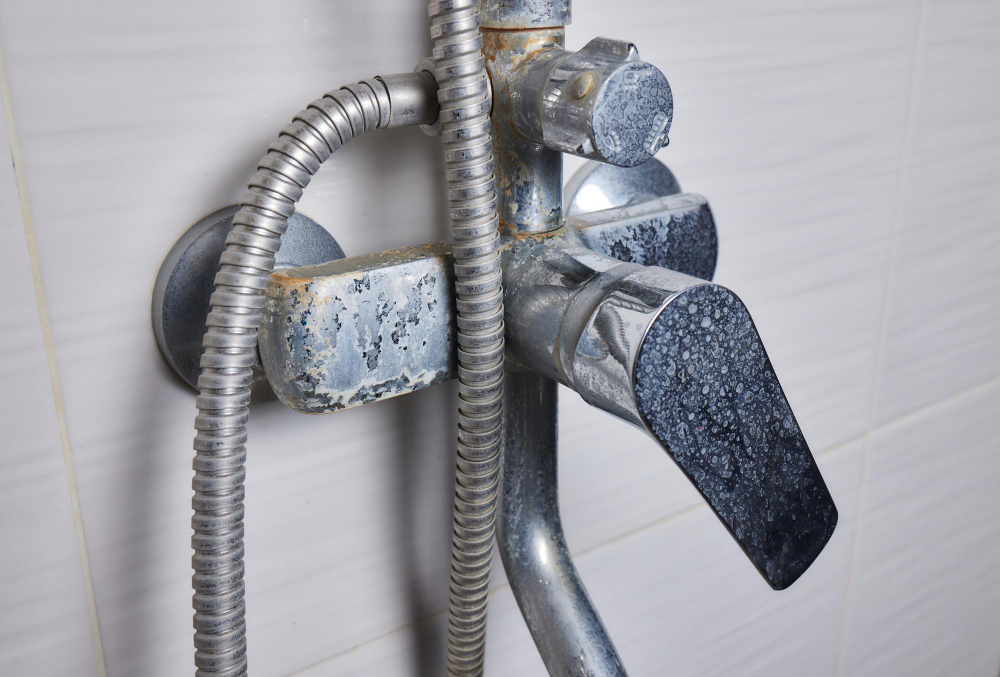
This symptom is the most obvious and immediately recognizable. We have all seen that chalky, flaky buildup on the base of faucets and at their spouts, which indicates the presence of calcium carbonate in the water.
As the water evaporates, it leaves behind these calcium and magnesium crystals, which form that unpleasant resemblance of stalactites and stalagmites from a cave on your faucets, showerheads, shower doors, and basins. Left long enough, the buildup will restrict water flow in your showerheads, damage your appliances, and tarnish the aesthetic design of high-end bathroom fixtures.
Itchy & Dry Skin, Hair Damage
The same calcium and magnesium deposits also stick to and react with chemicals and oils in your skin. The net effect of this reaction is the formation of a sticky scum that does not rinse off effectively. The scum clogs up your pores and creates issues with skin conditions such as eczema.
If you already have dry skin, it will remain itchy and irritated. As for hair, colors fade in hard water, and the thin coating of scum weighs down individual strands, making them feel straw-like and resistant to any proper styling. In extreme cases, hair damage and breakages occur.
Cloudy Dishes With Water Spots
It can be incredibly frustrating to open a dishwasher that has just finished its cycle and see glassware that still looks dirty. This residue that is left behind is the same calcium and magnesium deposits that cause limescale, but instead of developing over time, it’s evident as a thin film or spots on the glass.
Over time, these mineral deposits can actually etch the surface of the glass, permanently damaging its clarity. You may be tempted to think that it’s soapy residue left over because the dishwasher did not rinse properly, but that’s a red herring. It’s hard water causing those stains.
Stiff Laundry & Unsatisfactory Soap Lathering
Have you ever taken dry clothes out of the dryer or off the line and they feel stiff like a piece of cardboard? This is another symptom of hard water. The mineral deposits interfere with the proper lathering of the laundry soap.
There can also be a soap curd residue on the items of clothing that will damage the garments over time. Lathering shampoo for your hair may also seem ineffective, as well as other detergents for washing applications in the home and garage. This all occurs because the minerals in hard water inhibit the proper functioning of the soap, meaning that they cannot properly penetrate your clothes and hair when lathered.
Appliances That Use Water Fail Prematurely
Many appliances in your home use water: refrigerators with water filters, washing machines, dishwashers, espresso machines, water heaters, and ice makers, and probably many more! All of these get affected by having their water supply clogged up by limescale.
In the case of any appliance that heats water, this can be a silent energy drain too. For instance, your water heater is a tank that has a heating element in it at the bottom of the tank. Over time, calcium deposit sediment fills the bottom of the tank and eventually covers the element. This means that the element has to work much harder to heat the water to the thermostat’s setting. This uses much more energy than necessary and will eventually cause leaks in the tank and fixtures too.
Reduced Water Pressure and Clogged Pipes
There are many reasons why you may be battling water pressure. A sure sign is if you have had to replace a faucet and the new one seems to outperform all the others in the house; then the other faucets may have a problem with internal limescale buildup. You may also notice that the shower water pressure just isn’t quite up to your expectations. Remove the shower rose and take a look inside. Perhaps there is limescale buildup that is causing the reduced water pressure.
What Does A Water Softener Do?
A water softener is a chemical water treatment system. It does not make use of harmful chemicals but rather relies on an aspect of chemistry known as ion-exchange. During this process, thousands of resin beads are negatively charged with harmless sodium or potassium ions. As the water from your municipal supply or well comes into the water softener tank, the positive ions of the calcium and magnesium in the hard water are attracted to the negatively charged sodium or potassium ions.
Once the beads are saturated with calcium and magnesium ions, the brine tank commences a self-regulating flush with salty water to reintroduce a strong negative charge to the resin beads and a strong positively charged calcium and magnesium solution. This hard water is then all flushed down the drain harmlessly, and the system is reset to continue its softening effect.
Don’t Water Filters and Reverse Osmosis Systems Do the Same Thing?
No, they actually don’t. While on the face of things it may appear that they do the same thing, they do not do it in the same way, and as you’ll see, that makes all the difference.
Water Filters
A water filter operates for the entire home’s water supply and mainly is a carbon block with a polypropylene filter. These filters remove sediment and odors from the water to make it tastier to drink and clear it up. They are used primarily to remove chlorine, rust, heavy metals, and other bad-smelling chemicals that affect the taste of drinking water. They do not soften the water at all since the calcium and magnesium ions are too small to be filtered out physically, and so they must be acted upon ionically.
Reverse Osmosis Systems
A reverse osmosis system does soften water as it removes almost all ions from the water that it produces. The reason why it is not a water softener is that it produces a very large amount of waste water brine in order to do so. It is not a system for the supply of water to an entire home but really only suitable for point of use such as a kitchen sink or refrigerator ice maker. It uses high-pressure water forced through a semi-permeable membrane to remove pure water and waste the brine.
The problem is that this is a slow process that cannot supply a home’s water requirements fast enough, and severely hard water will actually clog up the membrane very quickly, rendering the system ineffective. Reverse osmosis systems work best with water that has already been softened.
Water Softeners Fix the Problem at Source
A water filter can be used in tandem to filter the entire home’s water supply, but it can’t do anything about softening water; it can only improve taste and remove sediment. A reverse osmosis system simply cannot handle the volumes that a home requires for ordinary use and will end up flushing 60% of your water bill down the drain. Literally.
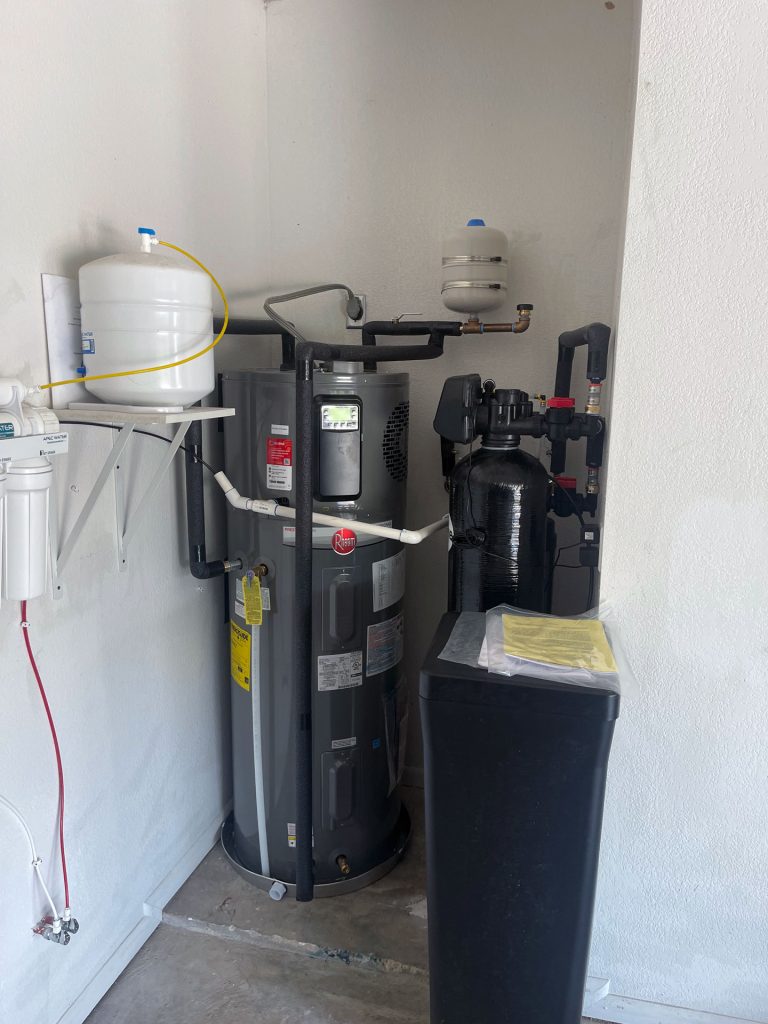
A water softener is the fit-for-purpose solution to a hard water supply problem. Your home will need a reputable local plumber to install a water softener, as it is connected straight to your main water supply line. Water softeners can both soften the water and handle the sheer volume of water required to run a home, as well as self-regulate. It is the only option to rid your home of limescale for good.
Testing Water Hardness
Calling in a qualified local plumber is the best way to get conclusive results on your water hardness. They will be able to give you a report on the quality of your water as well as the hardness level. Appliance manufacturers have historically reported water hardness as grains per gallon (gpg); however, there is an increased trend towards measuring using the international standard of parts per million (ppm).
Below is a table to show the levels of water hardness:
| Hardness Level | Parts per million (ppm) | Grains per gallon (gpg) |
| Slightly Hard | 17 – 60 | 1.0 – 3.5 |
| Moderately Hard | 60 – 120 | 3.5 – 7.0 |
| Hard | 120 – 180 | 7.0 – 10.5 |
| Very Hard | > 180 | > 10.5 |
Eager To Deal With Hard Water Once and For All?
Now that you know how to notice the warning signs that the water is hard in your area, perhaps you need to lean on the expertise of a trusted and qualified local plumber to assist. With over 30 years of combined experience, Eager Plumbing has been effectively assisting South Central Texas homeowners with their plumbing needs.
Installing water softeners is one of our main service areas, and we have professionally installed hundreds of these systems for customers all over San Antonio, Kerrville, and surrounding Hill Country communities.
Ready to say goodbye to hard water? We can help! If you need a water softener installed, call or text us today at (830) 999-PIPE (7473).